Massage Myths: 'Massage Dehydrates You'
Updated: Jul 24
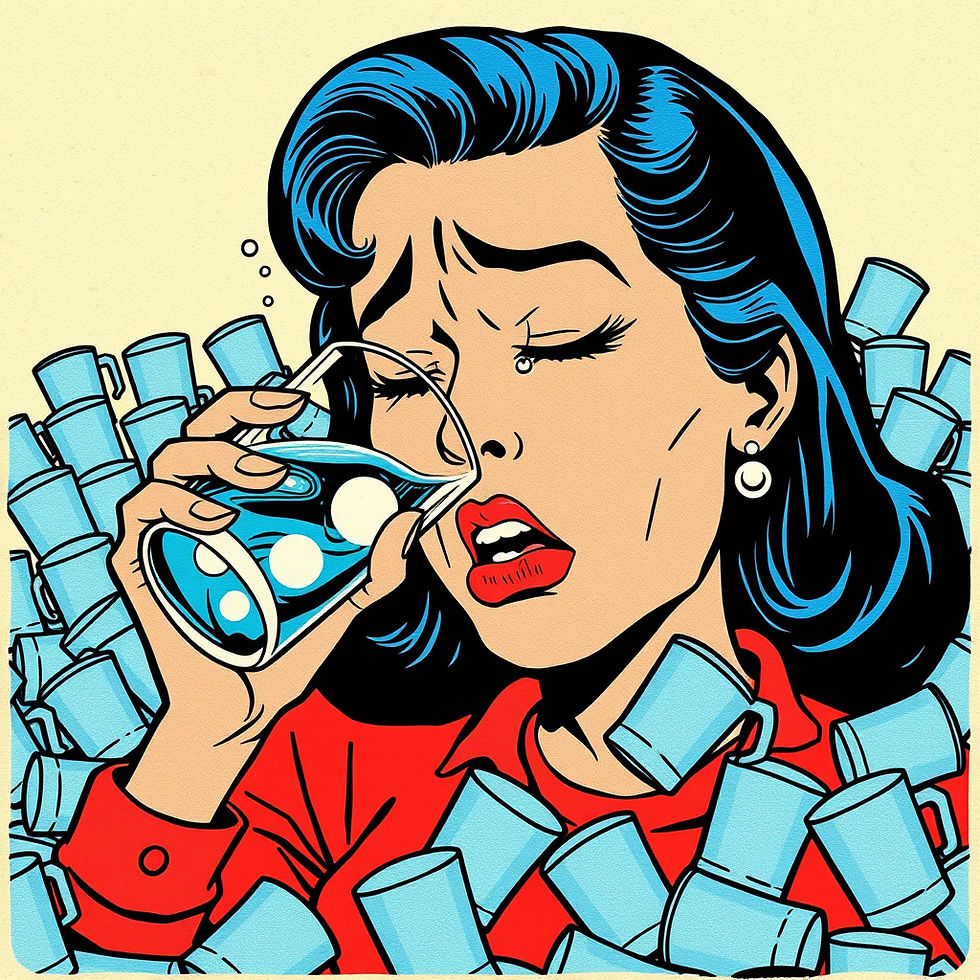
(A summary of what hydration actually does—and doesn’t—do after massage) Estimated read time: ~3 minutes
“Make sure you drink a ton of water! We did AH-LOT today!"
If you’ve had massage before, you’ve probably heard some version of that line.
At The Massage Clinic, we’re pro‑hydration, but we’re not pro‑scare‑tactics, so we’ve looked at how this advice got started and what the evidence and informed commentary actually say.
The Problem
The water myth is glued to the toxin myth.
Many clients have been told that massage releases toxins into the bloodstream and that if they don’t drink a lot of water afterward, they’ll feel poisoned or extra sore. As we covered above, there’s no good evidence that massage releases specific toxins or lactic acid that water needs to “flush out.”
Hydration itself is important—but not in a magical way.
Being reasonably hydrated supports blood volume, kidney function and general well‑being. But there are no clinical trials showing that drinking extra water after massage reduces soreness or prevents symptoms from “released toxins.” Writers within and around the massage world have gone as far as to call this advice a well‑meaning myth: water is good, but massage doesn’t suddenly create a new need for extreme intake. For some people (for example, those with heart or kidney issues), pushing large volumes of fluid can even be unhelpful and should be guided by their medical team.
Brief summary of the research (and how we use it)
Client‑education pieces by science‑minded practitioners point out that the “water flushes toxins” story doesn’t line up with basic physiology. They note that while dehydration can make anyone feel worse, there is no identified toxin being released by massage, no data showing that post‑massage water prevents sickness and no special detox pathway activated by drinking extra water after bodywork.
Writers who have looked closely at the lactic‑acid story emphasize that lactate clears quickly after exertion and that drinking more water after massage will not change that process in a meaningful way. More broadly, reviews of massage mechanisms focus on modulation of pain, muscle tone, stress hormones and inflammatory markers—not on changes that would require aggressive hydration as a safety measure.
For us at The Massage Clinic, this means we might offer you water because many people are mildly under‑hydrated and a glass of water is kind, not because we’re afraid you’re full of dangerous byproducts.
For you as a client, the shift is simple: listen to your thirst, follow any fluid guidance from your medical providers and don’t feel pressured to “chug” after your session.
A practical takeaway: if you tend to feel headachy after massage, checking your general daily hydration, food intake and stress levels will usually be more useful than forcing a post‑session liter by itself.
At The Massage Clinic, we keep this context in mind when we talk about post‑massage care, and we’re here to help if you need us.
References
American Massage Therapy Association (AMTA). Myths in massage research: massage releases toxins. 2022. Discusses how toxin and water myths developed in massage and why they aren’t supported by evidence.[amtamassage]
Equilibrium Therapeutics. Does massage flush toxins? 2015. Explains that massage does not create a special need for aggressive water intake beyond normal hydration.[equilibriumtherapeutics]
Ingraham P. Why drink water after massage therapy? PainScience.com. 2018. Argues that while water is generally healthy, the idea that it “washes away” massage‑released toxins is physiologically implausible.[painscience]
Lexington Healing Arts Academy. Myth: Massage releases toxins. 2019. Notes that lactic acid is cleared quickly after exertion and that post‑massage water does not flush lactic acid from muscles.[lexingtonhealingarts]
Collins CP. Flushing toxic myths and misinformation out of massage therapy. 2024. Critiques common post‑massage hydration and toxin narratives, encouraging evidence‑based client education.[conorpcollins]
Bervoets DC, et al. Investigating the mechanisms of massage efficacy. J Complement Integr Med. 2015;12(2):91‑101. Summarizes plausible mechanisms of massage without identifying any detox or water‑dependent effects.pmc.ncbi.nlm.nih+1


Comments